

A busy revolving door connects the senior ranks of governments and the fossil fuel industry. By taking on government jobs, fossil fuel representatives can influence the policies of the offices which are supposed to regulate them. By hiring former government officials, the fossil fuel industry can in turn acquire not only knowledge and experience, but also internal information. And just as importantly, it can signal to current officials that supporting its interests may pay off after retirement.
The Trump administration maintains particularly close relations with the fossil fuel industry. Trump’s first energy secretary Rick Perry was a board member of Energy Transfer Partners, the company developing the controversial Dakota Access pipeline, before he joined the government. He returned to the same position once he retired, after enabling the completion of the project.
According to a report by Public Citizen, the current Trump administration includes 43 people who were employed by coal, oil or gas companies, not least energy secretary Chris Wright, the former CEO of a fracking company. Many of them will undoubtedly return to the fossil fuel industry after retiring from government.
The revolving door is not limited to the United States. Soon after Gerhard Schröder resigned as German chancellor in 2005, he became the board chair of the pipeline company Nord Stream, a subsidiary of Russia’s Gazprom conglomerate – a conglomerate to whom his government had offered a large export credit in the final weeks of his tenure. In 2022, Schröder was nominated as the board chair of Gazprom itself, a position which he renounced after Russia launched its full-scale war against the Ukraine.
The revolving door in Switzerland
Even in Switzerland, a well-oiled revolving door connects the fossil fuel industry and the government. Before Albert Rösti, the powerful Minister of the Environment, Transport, Energy and Communications who regularly delays and waters down Switzerland’s climate policies, joined the Federal Council, he chaired both Swissoil and Auto Schweiz, the lobbying groups of the Swiss oil and car importers.

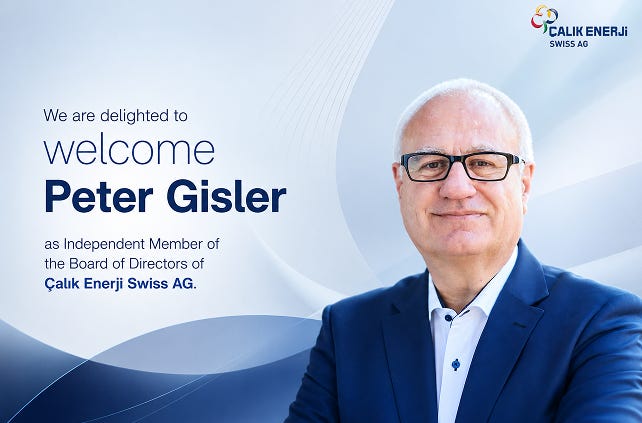
Peter Gisler, the former CEO of the Swiss Export Risk Insurance SERV, is another case in point. Gisler was head of export finance at ABB, one of the world’s leading power equipment manufacturers and a major recipient of Swiss export credits, before he took on SERV’s top job in 2016. Only three months after he retired from his government position, he joined the board of Calik Enerji Swiss, another major recipient of Swiss export credits, in July 2026.
Under Gisler’s tenure, Calik had received SERV support for massive gas power plants in Turkmenistan, one of the world’s most corrupt and repressive countries, and in Poland, a country where thermal power can no longer compete with cheap solar power on commercial terms. SERV supported both projects in violation of Switzerland’s pledge to no longer support international gas projects after 2022. Calik clearly had reasons to “warmly welcome” the former CEO on its board.
Numerous countries in Asia, Europe and North America have created so-called cooling-off regulations to restrict the revolving door between government and industry. Depending on the country, these regulations only apply to former ministers and other senior officials as well, last for a period of one to three years, and ban the practice outright or subject it to a review by an ethics panel.
Toothless regulations in Switzerland
In Switzerland, the government can agree on a cooling-off period of six to twelve months with employees who have “significant influence on individual decisions of major consequence or access to extensive information” if their future activities would lead to a conflict of interest and taint the credibility of their former office.
The implementation of this provision is apparently lax. SERV maintains that its officials are employed under private sector law and not subject to a cooling-off period. The SERV act however stipulates that the employment of its director should follow the spirit of government regulations, and the cooling-off rule not only applies to government officials but also other public employees with significant influence.
According to the media, even State Secretary Helene Budliger Artieda, who directs the State Secretariat for Economic Affairs and recently gave notice, will not have to follow a cooling-off period. (Tongue in cheek, the Public Eye has offered Budliger Artieda an advisory position for global justice and fair trade, but it will surprise if the retiring State Secretary chooses the karma points offered by the campaign group over a well-paid job in the private sector.)
Sunlight is the best disinfectant. Given the close relations between business interests and the Swiss government, it is all the more important that full access to relevant information allow the public scrutiny of entities like SERV. Furthermore Switzerland’s national interests are not the same as the interests of its exporters. The SERV board, which includes numerous representatives of the export industry, should be complemented by experts who represent the Swiss interest in protecting the environment and human rights.
Good example of revolving doors! Just visited the website of Çalık Enerji Swiss - they write about renewable energy solutions and low-carbon future. But seem to be mainly specialized in gas and gas combined solutions = fossil fuel based, false solutions for the climate........